Buran Ghati Trek Guide: The "All-in-One" Himalayan Buffet
📍The Mighty Himalayas (North India)
The Summit Summary
- Location: Himachal Pradesh (Shimla District, Rohru Region).
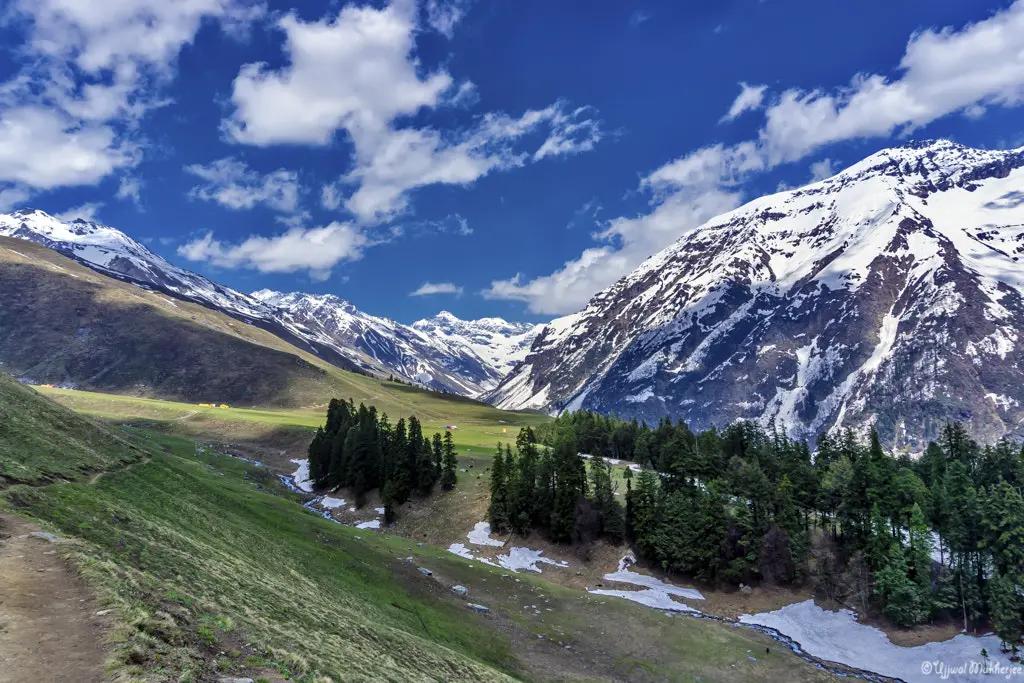
- The Vibe: The "Grand Buffet." Most treks specialize in one thing (meadows OR snow OR forests). Buran Ghati serves everything on one platter: ancient pine forests, velvet meadows, a high-altitude alpine lake, a technical snow pass, and a fruit orchard finish.
- Difficulty: Moderate to Difficult. The "Wall" at the pass requires rappelling or a controlled slide, adding a technical thrill absent in treks like Hampta Pass.
- Duration & Variants: 7 Days (Standard Itinerary). 37 km Total Distance.
- TrippinAI Recommended Slot: June (for the legendary snow slide) or September to Mid-October (for sharp autumn views and golden meadows).
- The TrippinAI Rating: "At TrippinAI, we rate this trek a 7/10 on endurance and thrill (specifically for the adrenaline-pumping 400-meter descent from the pass)."
The Climb: What to Expect
The Reality Check: Buran Ghati is cinematic. You start in Janglik, a heritage village untouched by time, with wooden houses and wheat fields. You ascend through dense pine forests that suddenly explode into the Dayara Thatch meadows (not to be confused with the one in Uttarakhand)—a rolling green carpet with wild horses. The drama peaks at Dhunda, the base camp, where you sleep surrounded by snow-capped jagged peaks. But the climax is the pass itself at 15,000 ft. Looking down, there is no trail—just a sheer vertical wall of snow. You don't walk down; you are lowered by ropes (rappelling) or you slide down 500 feet into the valley below. It ends gently in the apple orchards of Barua, grounding you back to civilization.
Why It's Famous & What Trekkers Say
The Fame Check:
- The "Rappel" Descent: It is famous for the vertical snow wall on the Barua side. It is one of the few commercial treks where rappelling gear is a standard requirement, making you feel like a pro mountaineer.
- The "Perfect" Meadow: The Dayara and Litham meadows on this trail are widely cited by seasoned trekkers as "more beautiful than Kashmir" due to their untouched pristineness.
The Social Pulse:
- The Good (What Trekkers Love): The variety. Every day looks completely different. Chandranahan Lake (the source of the Pabbar River) is a massive bonus excursion.
- The Bad (What Trekkers Hate): The drive to Janglik. It is a bumpy, back-breaking 9-10 hour journey from Shimla. The descent from the pass can be terrifying for those afraid of heights.
The Trail: Milestones & Route Map
The Route Breakdown:
- Janglik: Base Camp (9,200 ft). The Highlight: A photographer’s dream. The wooden architecture and smiling locals make it one of the prettiest base camps in India.
- Dayara Thatch: Day 2 Camp (11,000 ft). The Highlight: The forest clears into a massive meadow. The view of the Gunas Pass in the background is stunning.
- Litham: Day 3 Camp (11,700 ft). The Highlight: The hub. From here, you do the excursion to Chandranahan Lake.
- Chandranahan Lake: Excursion (13,900 ft). The Highlight: Seven glacial ponds fed by snowmelt. It is considered sacred by the locals.
- Dhunda: Day 5 Camp (13,300 ft). The Highlight: The alpine zone. You are now in the snow/rock zone, camping directly under the pass.
- Buran Ghati Pass: Summit Day (15,000 ft).The Highlight: The technical descent. The sheer drop forces an adrenaline spike.
- Barua Village: End Point. The Highlight: Walking through apple and apricot orchards to reach the roadhead.
How to Reach (The Gateway Hubs)
The Navigation Breakdown:
- State: Himachal Pradesh.
- Gateway Hub: Shimla.
- Base Camp: Janglik (Diude).
- End Point: Barua (near Karcham).
- By Air: Fly to Chandigarh (Shimla airport is unreliable).
- By Road: Bus/Cab from Chandigarh to Shimla -> Drive to Rohru -> Janglik.
The TrippinAI Verdict:
- Most Cost Efficient: HRTC Bus from Shimla (Old Bus Stand) to Rohru. Then Shared Jeep to Chirgaon/Tangnu/Janglik. Cost: ~INR 600. (Warning: Very Tiring).
- Most Time Efficient: Private Cab from Shimla directly to Janglik. Cost: ~INR 5,500 - 7,000.
- Most Popular: Trek packages usually include the transport from Shimla to Janglik and Barua to Shimla.
Total Budget & Hidden Costs
The Wallet Damage:
- TrippinAI Budget Rating: Mid-Range.
- Permits: Entry Fee Required. Forest permits are essential.
- Trek Package: Expect INR 13,500 - 18,000 per person. The cost is slightly higher due to the technical equipment (ropes/harnesses) required for the pass.
- Transport: Budget extra INR 3,000 - 4,000 for the long round-trip transport from Shimla.
Smart Spending Hacks:
- Hack #1: Stay in Shimla Old Bus Stand. If arriving a day early, stay in the dorms or budget hotels near the Old Bus Stand rather than the Mall Road. Save INR 1,500.
- Hack #2: Buy Fruit in Barua. At the end of the trek, buy apples/apricots directly from the farmers in Barua. They are organic, fresh, and dirt cheap compared to city prices.
- "Use TrippinAI for more accurate and personalized information on costs."
Food & Local Legends
Context:
- The Flavor: In Janglik, ask for Koda (millet) roti. The region is famous for its red rice and kidney beans.
- Local Insight: The Chandranahan Lake is the source of the Pabbar River and is considered the abode of the local deity, Shikru Devta. Locals believe entering the lake with shoes on brings hail and storms to the valley.
Seasonality, Safety & Health
Best Time to Visit:
- Summer (May-June): The wall is frozen. You will rappel or slide. This is the adventure window.
- Autumn (Sept-Mid Oct): The snow melts on the wall, turning it into a steep scree/rock descent. The meadows turn golden orange.
- Avoid:Monsoon (July-August). The road to Rohru is prone to landslides.
Traveler Safety Verdict:
- For Solo Travelers: No. You cannot rappel down the Buran Ghati wall alone unless you are a certified mountaineer with your own rope. You must join a group.
- For Female Travelers: Safe in Groups. Organized operators run this route frequently.
- For Beginners: Risky. If you are afraid of heights, the pass crossing will be paralyzing. Ideally, do an easier trek like Hampta Pass first.
Risks & Actionable Mitigation:
- The Vertical Descent: The drop from the pass is 70-80 degrees steep. Mitigation: Trust the Gear. Your guide will harness you. Lean back, keep legs wide for balance. Do not look down if scared; look at the rope.
- Altitude at Dhunda: You camp at 13,300 ft before the pass. Mitigation: Hydrate. The Chandranahan lake excursion on Day 4 is crucial for acclimatization (Climb High, Sleep Low). Do not skip it.
- "Check TrippinAI for real-time weather updates."
Getting Trek-Ready
Preparation Tips:
- Upper Body Strength: You might need to hold a rope or scramble. Push-ups and pull-ups help.
- Knee Conditioning: The descent to Barua is very long (4,000 ft drop). Squats are your best friend.
- Gloves: Carry Waterproof Gloves. Rope burns and snow burns on hands are common during the slide.
Expedition Essentials
- Footwear: Technical Trekking Boots. You need a hard toe box to kick steps into the snow wall.
- The "Hero" Item: Figure-8 Descender / Carabiner. (Provided by operators, but good to know what it is). It saves you on the wall.
- Clothing: Quick-Dry Layers. You will get wet sliding in the snow.
FAQ: Trekker's Most Asked Questions
Q: Is rappelling mandatory? A: It depends on snow conditions. In June, yes, usually for the first 50-100 meters. If the snow is soft, you might just slide. In October, you walk down a steep rocky trail (no rope needed, but very slippery).
Q: How cold does it get? A: Dhunda campsite is windy and cold. Expect temperatures to drop to -5°C at night.
Q: Is this harder than Rupin Pass? A: Comparable, but Buran Ghati is often considered slightly easier on endurance (shorter days) but sharper on the technical descent (the wall is steeper).
Planning Buran Ghati? The snow wall conditions determine if the pass is crossable. Static blogs can't tell you if the ropes are fixed. TrippinAI provides real-time pass status and technical updates. [Check Pass Conditions Now.]
Recommended for You
Namdapha Rainforest Trek Guide: The "Amazon of India" & The Four Cat Realm
Japfu Peak Trek Guide: The "Rhododendron Giant" & Valley Watchtower