Dzongri Trek Guide: The "Walking Stick" Ridge & The 270° Panorama
📍The Mighty Himalayas (North India)
The Summit Summary
- Location: Sikkim (Kanchenjunga National Park, West Sikkim).
- The Vibe: "Maximum View, Minimum Time." If Goechala is the marathon, Dzongri is the sprint. It offers 90% of the spectacular Kanchenjunga views found on the longer trek but packs them into a concise 5-day itinerary. You climb sharply through blooming forests to stand on a ridge that feels like a balcony overlooking the entire Himalayan range.
- Difficulty: Moderate. While short, do not underestimate the gradient. The climb from Yuksom (5,700 ft) to Dzongri (13,000 ft) is rapid and relentless, testing your cardio and acclimatization limits.
- Duration & Variants: 5-6 Days (Standard Itinerary). 50 km Total Distance.
- TrippinAI Recommended Slot: April to May (Rhododendron blooms) or October to November (Crystal clear skies).
- The TrippinAI Rating: "At TrippinAI, we rate this trek a 7/10 on endurance. It is the perfect 'Bridge Trek' for those who want high-altitude exposure without committing to a 10-day expedition."
The Climb: What to Expect
The Reality Check: The trek kicks off in Yuksom, plunging immediately into the lush biosphere of the Kanchenjunga National Park. The trail to Tshoka is a "Stairway to Heaven"—miles of wooden logs and stones winding through dense forests of oak, bamboo, and magnolia. As you ascend past Phedang, the trees shrink into alpine bushes, and the air thins. Reaching Dzongri feels like arriving on a different planet—a rolling, wind-swept meadow surrounded by jagged snowy peaks. The climax is the pre-dawn hike to Dzongri Top, where the sun illuminates the Kanchenjunga massif in a fiery spectacle.
Why It's Famous & What Trekkers Say
The Fame Check:
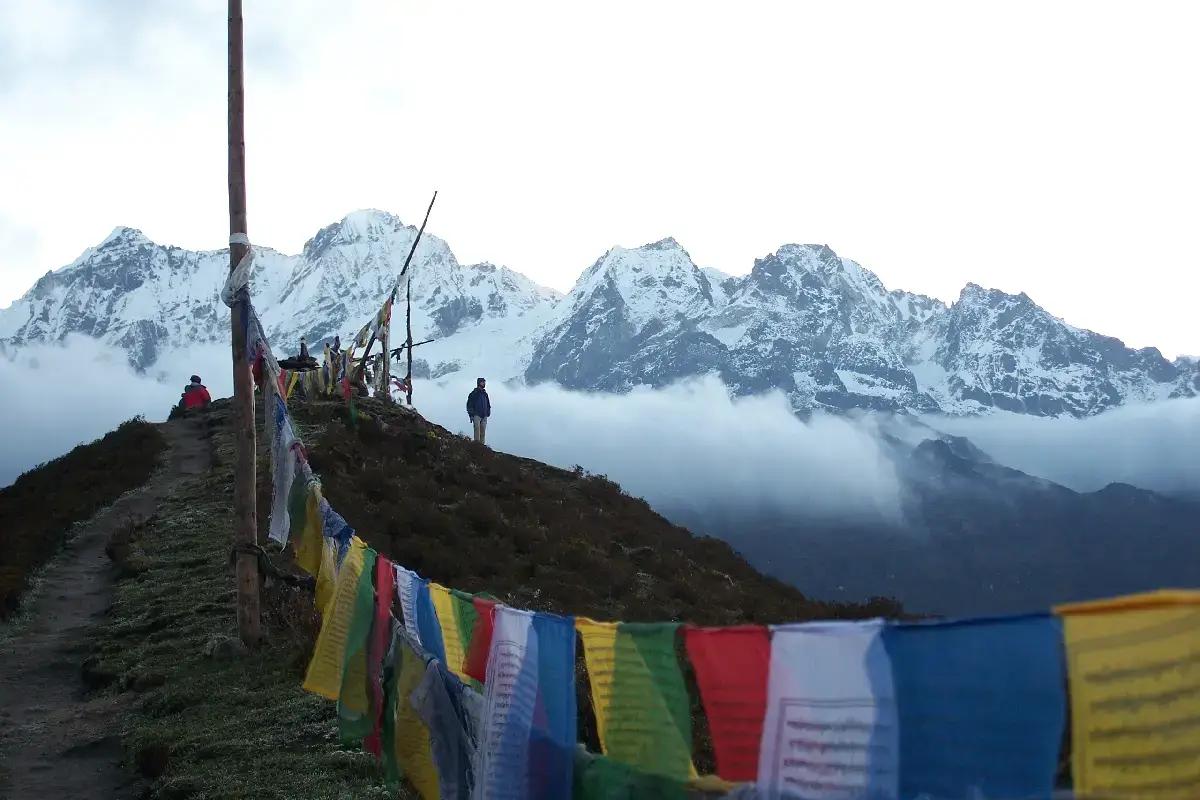
- The "270-Degree" View: Dzongri Top offers one of the widest panoramic views in the Himalayas. You can see majestic peaks like Kanchenjunga, Pandim, Kabru, Narsing, and Kokthang all in one sweep.
- The "Rhodo" Riot: In spring, the forest between Bakhim and Tshoka is an explosion of red and pink rhododendrons, making it a photographer's paradise.
The Social Pulse:
- The Good (What Trekkers Love): The efficiency. Getting to see the third-highest mountain in the world in just 3 days of walking is a huge win. The wooden cottages at Tshoka are also a favorite for their rustic charm.
- The Bad (What Trekkers Hate): The steepness. The rapid altitude gain gives many trekkers headaches (AMS) at Dzongri. The mud on the trail in early spring can be ankle-deep and slippery.
The Trail: Milestones & Route Map
The Route Breakdown:
- Yuksom:Start Point (5,670 ft). The Highlight: The historical capital. Pick up last-minute snacks here.
- Sachen / Bakhim: Day 2 Camp (7,200 ft). The Highlight: The "Swinging Bridges." You cross the Prek Chu river on long, swaying suspension bridges.
- Tshoka: Day 3 Camp (9,700 ft). The Highlight: A Tibetan refugee settlement. The monastery here is peaceful, and the view of Mt. Pandim at sunset is startling.
- Dzongri: Base Camp (12,980 ft). The Highlight: The meadows. You camp surrounded by high peaks. Yak herds are common here.
- Dzongri Top: Summit Point (13,675 ft). The Highlight: The 4:00 AM climb. The freezing wind is forgotten the moment the sun hits Kanchenjunga.
- Return Leg: Dzongri -> Tshoka -> Yuksom. The Highlight: The rapid descent is easy on the lungs but hard on the knees.
How to Reach (The Gateway Hubs)
The Navigation Breakdown:
- State: Sikkim.
- Gateway Hub: New Jalpaiguri (NJP) / Bagdogra.
- Base Hub: Yuksom.
- By Air: Fly to Bagdogra Airport (IXB).
- By Train: Train to NJP Station.
The TrippinAI Verdict:
- Most Cost Efficient: Shared Jeep from Siliguri (SNT Bus Stand) to Jorethang, then change to another jeep for Yuksom. Total Cost: ~INR 700.
- Most Time Efficient: Private Taxi from Bagdogra to Yuksom (7-8 hours). Cost: ~INR 6,500 - 8,000.
- Logistics Note: Transport in Sikkim is unionized. You often have to switch vehicles at Jorethang if not hiring a private through-cab.
Total Budget & Hidden Costs
The Wallet Damage:
- TrippinAI Budget Rating: Mid-Range.
- Permits: Mandatory.
- Indians: Police & Forest Permit (obtainable at Yuksom).
- Foreigners: Restricted Area Permit (RAP) + Trekking Permit (Must go through a registered agency).
- Trek Package: Expect INR 12,000 - 18,000 per person.
- Transport: The long drive to Yuksom is the biggest variable cost.
Smart Spending Hacks:
- Hack #1: Stay in Trekkers' Huts. The forest department maintains wooden huts at Sachen, Tshoka, and Dzongri. They are basic (wooden planks) but cheap (~INR 200/bed) and save you from carrying tents if booking DIY (guide still mandatory).
- Hack #2: Eat "Dal Bhat". On the drive to Yuksom, stop at local roadside dhabas. A full thali costs INR 150 and is infinite.
- "Use TrippinAI for more accurate and personalized information on costs."
Food & Local Legends
Context:
- The Flavor: At Tshoka, the local caretakers often brew Salted Butter Tea. It’s an acquired taste but works wonders for hydration and warmth.
- Local Insight: Dzongri translates to "Meeting Place of Men/Gods." It was historically used by yak herders as a summer pasture. Locals believe that the Yeti (Migou) still roams the higher reaches beyond Dzongri during heavy snows.
Seasonality, Safety & Health
Best Time to Visit:
- April-May: Flora Focus. Best for flowers and bird watching.
- Oct-Nov: Mountain Focus. Best for sunrise views and mountain photography.
- Avoid:Monsoon (Jun-Sep). The forest is infested with leeches. Winter (Jan-Feb) brings heavy snow, blocking the trail to Dzongri.
Traveler Safety Verdict:
- For Solo Travelers: Restricted. You cannot trek legally without a guide. Solo trekking is safe if you hire a local guide, but joining a group is cheaper.
- For Female Travelers: High Safety. The local support staff are professional and the route is popular.
- For Beginners: Doable. If you are fit, this is a great first high-altitude trek.
Risks & Actionable Mitigation:
- Rapid Ascent: Gaining 7,000 ft in 2 days (Yuksom to Dzongri) is aggressive. Mitigation: Hydrate. Drink 4 liters of water. If you get a headache at Tshoka, take it easy. Do not push to Dzongri if symptoms worsen.
- Leeches: In spring/monsoon, they are relentless. Mitigation: Salt Pouch. Carry a small pouch of salt to flick them off your boots. Tuck your pants into your socks.
- "Check TrippinAI for real-time weather updates."
Getting Trek-Ready
Preparation Tips:
- Calf Strength: The climb to Tshoka is steep. Do calf raises and stair climbing.
- Warm Gear: Dzongri is a wind tunnel. Even if Yuksom is hot, Dzongri will be near freezing.
- Documents: Carry 4 passport photos and ID copies for the permit office in Yuksom.
Expedition Essentials
- Footwear: Sturdy Trekking Boots. The trail has rocks, mud, and roots.
- The "Hero" Item: Binoculars. The view from Dzongri Top is distant but detailed. Binoculars bring Pandim and Kabru right to your eyes.
- Clothing: Windproof Jacket. Essential for the sunrise wait at the top.
FAQ: Trekker's Most Asked Questions
Q: Is it different from Goechala? A: Yes. Dzongri is the halfway point of the Goechala trek. Goechala continues for another 3-4 days towards the mountain base. Dzongri turns back after the view.
Q: Can I see Everest? A: No. You cannot see Mt. Everest from Dzongri. You see the Kanchenjunga massif. For Everest views, you need to go to Sandakphu (West Bengal).
Q: Is there electricity? A: No. Electricity ends at Yuksom. Carry power banks for 5 days.
Planning Dzongri? During peak season, the Trekkers' Huts at Tshoka fill up fast. If they are full, you must have tents. TrippinAI checks hut availability and advises if you need to carry camping gear. [Check Hut Status Now.]
Recommended for You
Namdapha Rainforest Trek Guide: The "Amazon of India" & The Four Cat Realm
Japfu Peak Trek Guide: The "Rhododendron Giant" & Valley Watchtower