Har Ki Dun Trek Guide 2026: The "Valley of Gods" & A Walk Through Time
📍The Mighty Himalayas (North India)
The Summit Summary:
- Location:Uttarakhand (Uttarkashi District, Govind Pashu Vihar National Park).
- The Vibe: A time-travel expedition.You aren't just trekking to a view; you are walking through 3,000-year-old wooden villages (Osla) that seem frozen in the Mahabharata era.
- Difficulty: Easy to Moderate Long distances (walking days are 6-7 hours), but the gradient is gradual, not punishingly steep.
- Duration & Variants: 5-7 Days (Standard Itinerary). 47-53 km Round Trip.
- TrippinAI Recommended Slot: Late April (for snow patches + greenery) or November (for golden autumn views). Avoid the monsoon.
- The TrippinAI Rating: "At TrippinAI, we rate this trek a 4.5/10 on endurance (due to long daily mileage of 10+ km, though on relatively flat terrain)."
The Climb: What to Expect
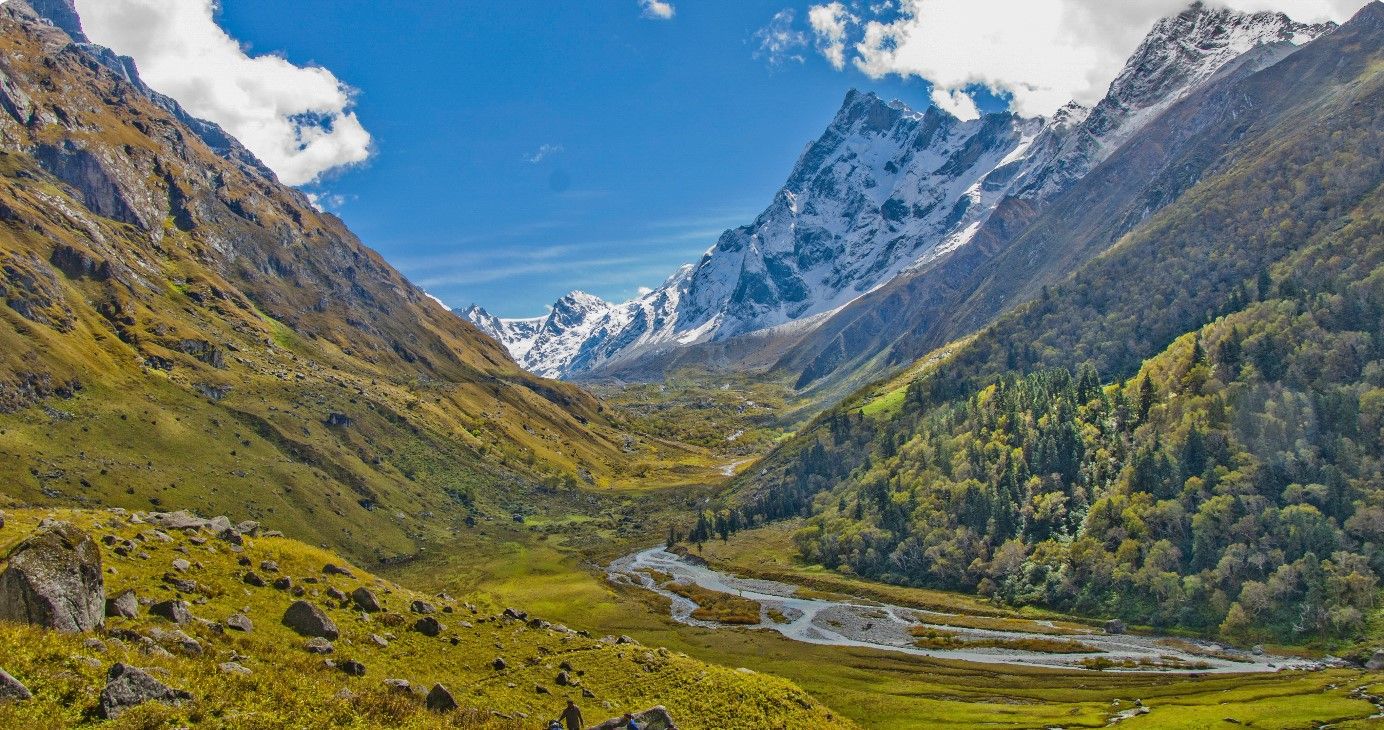
The Reality Check: The trail to Har Ki Dun is a sensory bridge between the ancient and the divine.Leaving the jeep at Taluka, you walk alongside the thundering Thamsa River, passing through dense forests of chestnut and walnut.The true magic hits at Osla Village—wooden houses on stilts, children playing with hand-carved toys, and elders spinning wool. As you push past the tree line to Kalkattiyadhaar, the valley suddenly widens into an amphitheater.Directly ahead, the Swargarohini Peaks (the legendary "Stairway to Heaven") pierce the sky. It’s not just a mountain view; it feels like walking into a mythological painting where silence is the only sound.
Why It's Famous & What Trekkers Say
The Fame Check:
- The "Mahabharata" Connection: Legend says this is the precise path the Pandavas took to ascend to heaven. The Swargarohini peak visible from the valley is believed to be the staircase itself.
- The "Duryodhana" Mystery: For years, outsiders believed the temple in Osla was dedicated to Duryodhana (the villain of Mahabharata).Locals clarify it is actually for Someshwar Devta (Lord Shiva), but the myth persists in pop culture.
The Social Pulse:
- The Good (What Trekkers Love): The unique culture of the local villages (Gangad & Osla). The fact that it’s a "River Valley" trek, meaning you are constantly near water. The relatively low altitude (11,700 ft) makes AMS rare.
- The Bad (What Trekkers Hate): The mule traffic on the trail (it’s an active trade route for locals). The 10-hour nausea-inducing drive from Dehradun to Sankri.
The Trail: Milestones & Route Map
The Route Breakdown:
- Sankri: Base Camp (6,400 ft).The Highlight: A buzzing trekker hub. Last spot to buy batteries or rent gear.
- Taluka: Drive Head (12 km Drive from Sankri).The Highlight: The road ends here. You start walking through a forest filled with wild roses and irises.
- Pauni Garaat / Seema: Day 2 Camp. The Highlight: The suspension bridge crossing. You camp by the riverside with the sound of the Supin river lulling you to sleep.
- Osla Village: Cultural Detour. The Highlight: The 2,000-year-old wooden temple architecture. It is a living museum.
- Kalkattiyadhaar: Day 3 Camp. The Highlight: The "Window" view. This is where you get the first full unobstructed view of the Har Ki Dun valley floor.
- Har Ki Dun: Summit Day (11,700 ft). The Highlight: The Maninda Tal lake (optional 2 km extension) and the view of Jaundhar Glacier.
How to Reach (The Gateway Hubs)
The Navigation Breakdown:
- State: Uttarakhand.
- Gateway Hub: Dehradun (Capital City).
- By Air: Fly to Jolly Grant Airport (Dehradun).
- By Train: Overnight Nanda Devi Express to Dehradun Railway Station.
- By Road: Dehradun to Sankri is a 180 km drive (approx. 8-10 hours).
The TrippinAI Verdict:
- Most Cost Efficient: Local Bus from Dehradun Railway Station to Sankri (Leaves at 5:30 AM sharp, costs ~INR 400).
- Most Time Efficient: Private Cab from Dehradun Airport directly to Sankri (Costs ~INR 5,500 - 7,000).
- Most Popular: Shared Bolero/Sumo arranged by your trek operator (Costs ~INR 1,000 - 1,200 per seat).
Total Budget & Hidden Costs
The Wallet Damage:
- TrippinAI Budget Rating: Mid-Budget.
- Permits: Entry Fee Required. Govind Pashu Vihar National Park fee is approx INR 150 (Indian) / INR 600 (Foreigner) for 3 days + daily camping charges.
- Trek Package: Expect INR 9,000 - 15,000 per person for a 6-7 day all-inclusive package.
- Disclaimer: Permit prices are subject to annual revision by the Forest Department.
Smart Spending Hacks:
- Hack #1: Rent, Don't Buy. A good minus-degree sleeping bag costs INR 8,000+. Rent it at Sankri for INR 100/day.Save INR 7,000.
- Hack #2: Book the 5:30 AM Bus. Private cabs are expensive. The government bus is uncomfortable but dirt cheap. Save INR 800 (vs Shared Cab).
- "Use TrippinAI for more accurate and personalized information on costs."
Food & Local Legends
Context:
- The Flavor: Try the local Red Rice (Laal Chawal) and Lingri (Fiddlehead Fern) sabzi at homestays in Sankri/Osla.
- Local Insight: The villagers of Osla have a unique dialect that is distinct even from standard Garhwali. They claim lineage to the Kauravas and Pandavas, maintaining traditions that date back millennia.
Seasonality, Safety & Health
Best Time to Visit:
- Best Window: April to June (Summer) and September to Mid-November (Autumn).
- Winter: December is possible for a "Snow Trek" experience, but the trail to the actual valley might be blocked by heavy snow in Jan/Feb.
Traveler Safety Verdict:
- For Solo Travelers: High Safety. The trail is a lifeline for local villages, so you are never truly isolated.
- For Female Travelers: High Safety. Sankri and the route are very commercialized and accustomed to female trekkers.
- For Beginners: Recommended. It is long but not technical. A great second trek after something easier like Triund or Kedarkantha.
Risks & Actionable Mitigation:
- Rain/Slush: The trail can get incredibly muddy in rain due to mule movement. Mitigation: Wear high-ankle boots with gaiters to prevent mud from entering your socks.
- Cold Nights: Even in summer, the wind chill at Har Ki Dun campsite is severe. Mitigation: Do not skip the "Windproof Layer" (Shell Jacket). Fleece alone is not enough.
- "Check TrippinAI for real-time weather updates."
Getting Trek-Ready
Preparation Tips:
- Endurance Training: The challenge here is distance, not height. Walk 10 km on weekends to get your feet used to long hours in boots.
- Knee Prep: The descent from Kalkattiyadhaar to Seema is long. Do lunges to strengthen quads.
- Digital Prep: BSNL is the only network that might work in Sankri. After Taluka, there is zero signal. Inform family beforehand.
Expedition Essentials
- Footwear: Waterproof Hiking Boots.You will cross streams and potentially snow patches.
- The "Hero" Item: Gaiters. If you go in Dec/April (snow) or monsoon (mud), these are life-savers.
- Clothing: 3 Layers. Temperatures can drop to -2°C at night even in April.
FAQ: Trekker's Most Asked Questions
Q: Can I do this trek without a guide? A: Theoretically yes, but not recommended for beginners. The trail forks near Osla/Ruinsara can be confusing. You need permits from the checkpost which are easier to manage with a local guide.
Q: Is electricity available on the trek? A: Only up to Osla (intermittently). Carrying a 20,000 mAh Power Bank is mandatory if you want to use your phone/camera.
Q: Can we see the Swargarohini Peak? A: Yes! That is the main highlight. You see peaks I, II, and III. Locals believe only the virtuous can see the summit clearly without clouds.
Planning Har Ki Dun? Village homestay availability and snow levels change weekly. Static blogs can't book your bed in Osla. TrippinAI gives you real-time updates and personalized itineraries. [Plan your journey now.]
Recommended for You
Namdapha Rainforest Trek Guide: The "Amazon of India" & The Four Cat Realm
Japfu Peak Trek Guide: The "Rhododendron Giant" & Valley Watchtower