Sandakphu Phalut Trek Guide: The "Sleeping Buddha" & The Everest Window
📍The Mighty Himalayas (North India)
The Summit Summary
- Location: West Bengal (Darjeeling District) / Nepal Border.
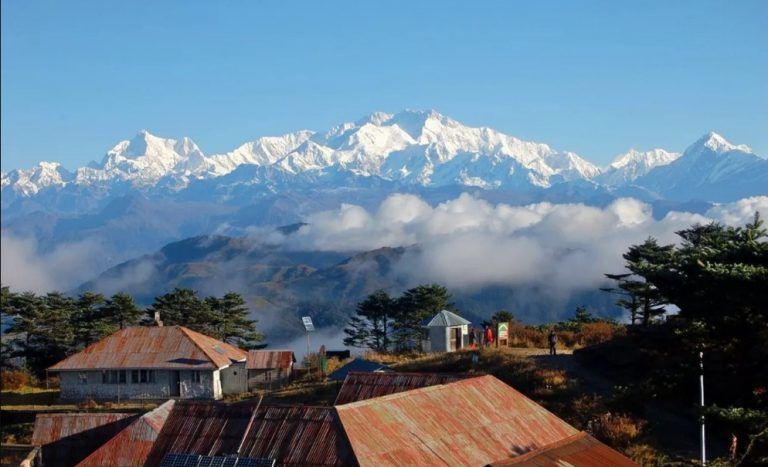
- The Vibe: A "Borderline" Walk. This is the only trek in India where you walk along a ridge that separates two countries. To your left is Nepal; to your right is India. You don't just see mountains; you see the "Grand Slam" of the Himalayas—Mt. Everest, Kanchenjunga, Lhotse, and Makalu (4 of the 5 highest peaks in the world) lined up in a single panoramic frame.
- Difficulty: Moderate. While the trails are well-defined (often cobblestone or dirt tracks), the distances are long. The walk from Sandakphu to Phalut alone is a 21 km marathon along the ridge.
- Duration & Variants: 6-7 Days (Standard Itinerary). 45-50 km Total Distance.
- TrippinAI Recommended Slot: March to April (for the famous Rhododendron bloom) or October to December (for the sharpest views of the Sleeping Buddha).
- The TrippinAI Rating: "At TrippinAI, we rate this trek a 6/10 on endurance. It is a 'Teahouse Trek' (no tents needed), which significantly reduces the physical load, but the windy ridges and long walking days test your stamina."
The Climb: What to Expect
The Reality Check: Sandakphu is a trek of cultural fusion. It usually starts from Manebhanjan or Dhotrey, passing through misty forests of pine and giant bamboo. You stay in charming wooden lodges (Teahouses) in villages like Tumling and Kalipokhri, where the culture is a mix of Nepali, Tibetan, and Sherpa. The climb to Sandakphu (11,930 ft) is steep but rewarding. The real magic, however, happens on the walk to Phalut. This stretch is relatively flat but incredibly windy, offering uninterrupted views of the Kanchenjunga massif, which looks like a "Sleeping Buddha" lying on the horizon. The descent through Gorkhey and Srikhola brings you back into lush, fern-filled forests.
Why It's Famous & What Trekkers Say
The Fame Check:
- The "Four Giants" View: It is arguably the best spot in India to see Mt. Everest without actually going to Nepal. The cluster of Everest, Lhotse, and Makalu appears as a distant snowy triangle.
- The "Vintage Land Rovers": The trail is actually an old 1940s road. You will often see vintage British Land Rovers (used as local taxis) struggling up the steep cobblestone paths—a sight unique to this region.
The Social Pulse:
- The Good (What Trekkers Love): The comfort. Sleeping on beds and eating hot meals in teahouses is a luxury compared to camping treks. The village of Gorkhey—nestled in a valley with a stream and pine trees—is often voted the prettiest campsite.
- The Bad (What Trekkers Hate): The road. Trekking on a motorable road (even if traffic is low) can feel less "wild" to purists. The cobblestones near Sandakphu are hard on the feet.
The Trail: Milestones & Route Map
The Route Breakdown:
- Manebhanjan / Dhotrey: Start Point (6,300 ft). The Highlight: Manebhanjan is the hub of the Land Rovers. Dhotrey offers a shorter, more scenic forest shortcut.
- Tumling: Day 1 Camp (9,600 ft). The Highlight: A viewpoint in Nepal. Waking up here offers a stunning sunrise over Kanchenjunga.
- Kalipokhri: Day 2 Camp (10,400 ft). The Highlight: The "Black Pond." A sacred lake that never freezes completely. The wind picks up here.
- Sandakphu: Summit 1 (11,930 ft). The Highlight: The highest point in West Bengal. The 180-degree panoramic view is the trek's USP.
- Phalut: Summit 2 (11,811 ft). The Highlight: Closer to Kanchenjunga than Sandakphu. It feels more isolated and barren.
- Gorkhey: Descent Village (7,700 ft). The Highlight: A fairytale village surrounded by pine forests and a river.
- Srikhola: End Point. The Highlight: The hanging bridge and the exit road.
How to Reach (The Gateway Hubs)
The Navigation Breakdown:
- State: West Bengal.
- Gateway Hub: New Jalpaiguri (NJP) / Bagdogra.
- Base Hub: Manebhanjan (4 hours from Darjeeling/Siliguri).
- By Air: Fly to Bagdogra Airport (IXB).
- By Train: Train to NJP Station.
The TrippinAI Verdict:
- Most Cost Efficient: Shared Taxi from NJP to Mirik or Ghoom, then local taxi to Manebhanjan. Total Cost: ~INR 500-700.
- Most Time Efficient: Direct Private Cab from Bagdogra/NJP to Manebhanjan. Cost: ~INR 3,500 - 4,500.
- Logistics Note: If starting from Dhotrey (recommended for scenery), you need a taxi from Manebhanjan to Dhotrey (1 hour).
Total Budget & Hidden Costs
The Wallet Damage:
- TrippinAI Budget Rating: Mid-Range.
- Permits: Singalila National Park Fee. Required for entry. Camera fees are extra.
- Trek Package: Expect INR 10,000 - 15,000 per person.
- DIY Cost: Very doable. Teahouses charge INR 1,000 - 1,500 per night (stay + food). Guide is mandatory.
Smart Spending Hacks:
- Hack #1: Start from Dhotrey. Skip the boring road walk from Manebhanjan. Start from Dhotrey to walk through a beautiful forest trail directly to Tumling. It saves time and looks better.
- Hack #2: Eat Local. The teahouses serve "Thukpa" or "Dal Bhat." Western dishes like pancakes are priced higher. Stick to the local staple to save money (and it's fresher).
- "Use TrippinAI for more accurate and personalized information on costs."
Food & Local Legends
Context:
- The Flavor: Don't miss the Tongba (Millet Beer) in Tumling. It’s warm, mildly alcoholic, and perfect for cold nights. Also, try the Yak Cheese if available.
- Local Insight: The Red Panda is the ghost of this trail. The Singalila National Park is one of its last habitats. While sightings are rare, guides often spot their scat or scratch marks on bamboo. Locals believe seeing one brings good fortune.
Seasonality, Safety & Health
Best Time to Visit:
- March-April: Flower Power. The forests are red and pink with Rhododendrons and Magnolias.
- Oct-Dec: Crystal Views. The haze disappears, offering the crispest views of Everest and Kanchenjunga.
- Avoid:Monsoon (Jun-Sep). Leeches are everywhere. Jan-Feb is snowy and extremely cold (teahouses may lack heating).
Traveler Safety Verdict:
- For Solo Travelers: Safe. However, a guide is mandatory by park rules. You cannot enter Singalila National Park alone without a registered guide/porter.
- For Female Travelers: High Safety. The teahouse culture is family-run and very secure.
- For Beginners: Top Pick. Since you sleep in beds and don't need to carry camping gear, it is an excellent "First Himalayan Trek."
Risks & Actionable Mitigation:
- Wind Chill: The ridge from Sandakphu to Phalut is exposed to fierce winds. Mitigation: Windbreaker. A good windproof jacket is more important here than a heavy down jacket.
- Altitude Sickness: Though "only" 12,000 ft, it can hit you. Mitigation: Hydrate. Do not drink too much alcohol (Tongba) at Sandakphu if you feel a headache.
- "Check TrippinAI for real-time weather updates."
Getting Trek-Ready
Preparation Tips:
- Stair Climbing: There are steep ascents near Kalipokhri. Train your calves.
- ID Proof: You are walking on the Nepal border. The Sashastra Seema Bal (SSB) patrols the area. Keep your ID (Aadhaar/Voter ID) handy at all times.
- Cash: No ATMs after Mirik/Manebhanjan. Carry enough cash for the whole week.
Expedition Essentials
- Footwear: Trekking Shoes with good grip (cobblestones can be slippery).
- The "Hero" Item: Power Bank. Electricity in teahouses is limited and they often charge extra (INR 100-200) to charge phones. A heavy-duty power bank saves money.
- Clothing: Gloves. The morning walk to Phalut is freezing for the hands.
FAQ: Trekker's Most Asked Questions
Q: Do I need a visa for Nepal? A: No. Indians do not need a visa. The border is open, and the trail weaves in and out naturally.
Q: Can I take a car to Sandakphu? A: Yes. The vintage Land Rovers go all the way to Sandakphu and Phalut. However, the ride is extremely bumpy and bone-rattling ("The Dancing Road").
Q: Is network available? A: Patchy. Indian networks (Jio/Airtel) work in Manebhanjan and spotty at Sandakphu. Ironically, Nepal networks (Ncell) often have strong signals along the ridge.
Planning Sandakphu? The demand for teahouses spikes in December/January for the New Year. Rooms sell out months in advance. TrippinAI tracks teahouse availability and can suggest alternate homestays in nearby villages. [Check Room Availability Now.]
Recommended for You
Namdapha Rainforest Trek Guide: The "Amazon of India" & The Four Cat Realm
Japfu Peak Trek Guide: The "Rhododendron Giant" & Valley Watchtower