Satopanth Lake Trek Guide: The "Triangular Lake" & Path to Heaven
📍The Mighty Himalayas (North India)
The Summit Summary
- Location: Uttarakhand (Chamoli District, near Badrinath/Mana).
- The Vibe: A "Spiritual Expedition." This isn't just a trek; it's a walk through the Swargarohini path (Stairway to Heaven) mentioned in the Mahabharata. You walk alongside the Alaknanda river, navigating glaciers to reach a mysterious green triangular lake at 15,100 ft.
- Difficulty: Moderate to Difficult. The challenge is the terrain (loose scree, boulders, and glacial ridges) and the altitude.
- Duration & Variants: 5-6 Days (Standard Itinerary). 46 km Total Distance (Round Trip).
- TrippinAI Recommended Slot: June (for snow bridges) or September to early October (for clear views of the Chaukhamba massif).
- The TrippinAI Rating: "At TrippinAI, we rate this trek a 7/10 on endurance (due to the tricky glacier crossing at Dhano Glacier and the lack of proper trails in the boulder zones)."
The Climb: What to Expect
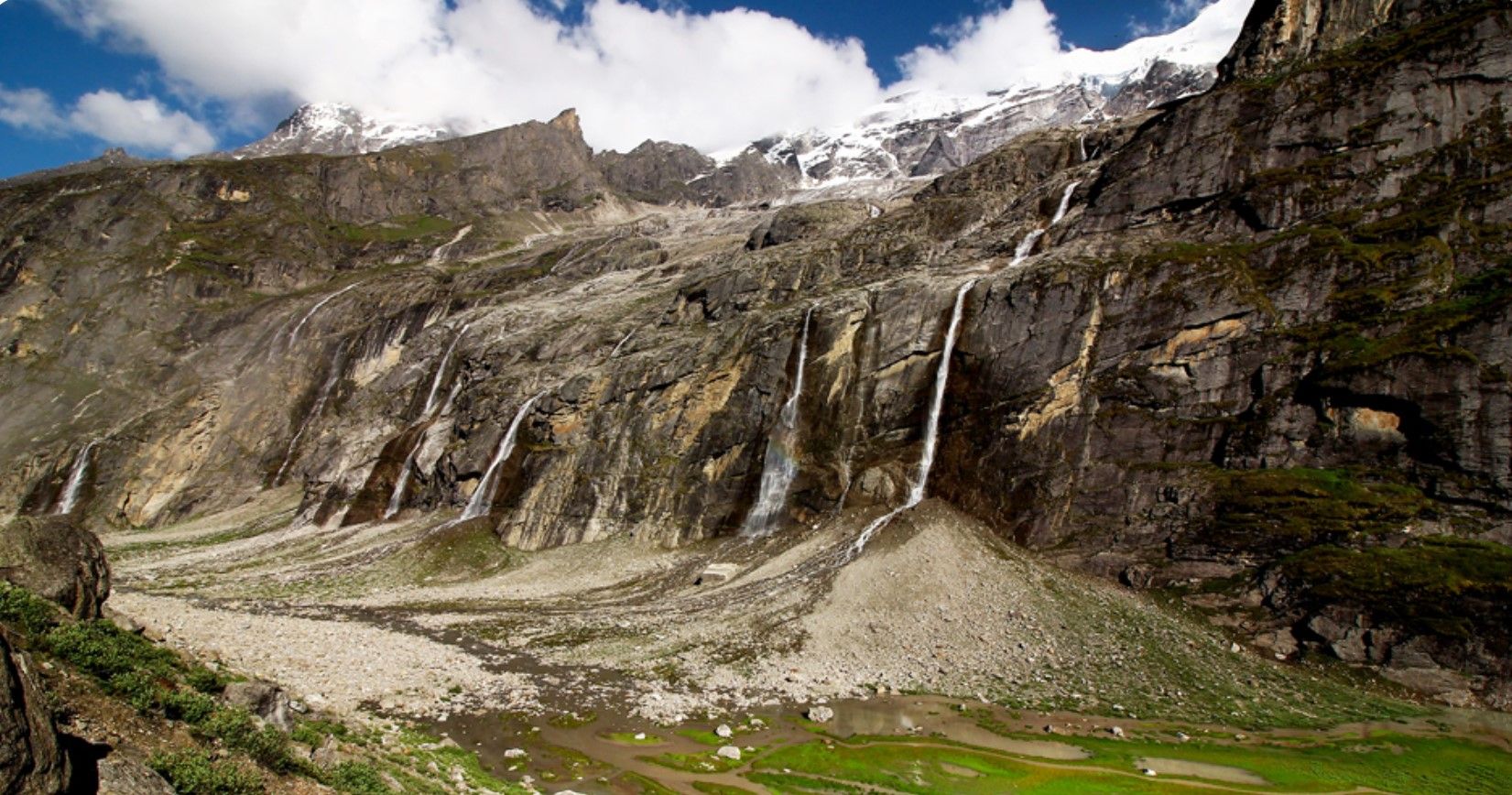
The Reality Check: The journey to Satopanth is raw and untamed. Starting from Mana (India's "Last Village"), the trail immediately throws you into a world of waterfalls (Vasudhara) and legends. The path is rarely flat; you are constantly hopping over boulders or traversing narrow ridges. As you cross the Dhano Glacier, the air gets thin and cold. But the arrival at Satopanth Tal is surreal—a perfectly triangular, emerald-green lake surrounded by the snow-clad giants of Chaukhamba, Neelkanth, and Balakun. The silence here is absolute, broken only by the occasional crack of a distant avalanche. It feels sacred, untouched, and otherworldly.
Why It's Famous & What Trekkers Say
The Fame Check:
- The "Trinity" Triangle: The lake's triangular shape is believed to represent the Hindu Trinity—Brahma, Vishnu, and Mahesh—who occupy one corner each.
- The "Last Walk": It is believed to be the exact route Yudhisthira (from the Mahabharata) took to reach heaven in his mortal body.
The Social Pulse:
- The Good (What Trekkers Love): The spiritual aura. Trekkers often describe a sense of peace here found nowhere else. The view of the colossal Chaukhamba face reflecting in the lake is a photographer's dream.
- The Bad (What Trekkers Hate): The accommodation. There are no lodges; you sleep in caves (local shelters) or tents on uneven ground. The lack of drinkable water sources on the ridge sections is challenging.
The Trail: Milestones & Route Map
The Route Breakdown:
- Mana Village: Start Point (10,500 ft).The Highlight: Walking past the Bheem Pul (a massive rock bridge) and the Saraswati River.
- Laxmi Van: Day 1 Camp (11,900 ft). The Highlight: A birch forest (Bhojpatra) believed to be where Draupadi breathed her last.
- Chakratirtha: Day 2 Camp (13,800 ft). The Highlight: A large meadow used as a base. The majestic Neelkanth peak towers directly above.
- Satopanth Tal: Summit/Lake (15,100 ft).The Highlight: The green triangular lake. Devotees often take a holy dip (despite the freezing water) and circumambulate the lake.
- Swargarohini Glacier: Viewpoint. The Highlight: Visible from the lake, this is the legendary "Stairway to Heaven" glacier.
How to Reach (The Gateway Hubs)
The Navigation Breakdown:
- State: Uttarakhand.
- Gateway Hub: Rishikesh / Haridwar.
- Base Hub: Badrinath (300 km from Rishikesh).
- Start Point: Mana (3 km from Badrinath).
- By Air: Fly to Jolly Grant Airport (Dehradun).
- By Road: Drive Rishikesh -> Joshimath -> Badrinath -> Mana.
The TrippinAI Verdict:
- Most Cost Efficient: Govt. Bus from Rishikesh to Badrinath (starts 4:00 AM). Cost: ~INR 800-1000.
- Most Time Efficient: Private Cab from Dehradun/Rishikesh to Badrinath. Cost: ~INR 9,000 - 12,000.
- Most Popular: Pilgrimage buses or shared taxis that ply regularly during the Yatra season (May-Oct).
Total Budget & Hidden Costs
The Wallet Damage:
- TrippinAI Budget Rating: Mid-Range.
- Permits: Entry Fee Required. Forest permits are obtained at the checkpost near Mana.
- Trek Package: Expect INR 15,000 - 20,000 per person. The cost includes porters and tents, which are mandatory as there are no guesthouses.
- Transport: Budget extra INR 3,000 for round-trip transport from Rishikesh.
Smart Spending Hacks:
- Hack #1: Share a Porter. If you are a group of 3, hire one porter for the common heavy gear (tents/cooking) and carry your own personal bags. Save INR 1,000/day.
- Hack #2: Stay in Badrinath Ashrams. Hotels in Badrinath are expensive. Stay in Ashrams (like Manav Kalyan or Parmarth) for INR 300-500/night including meals.
- "Use TrippinAI for more accurate and personalized information on costs."
Food & Local Legends
Context:
- The Flavor: Mana is famous for its potatoes and herbal tea. Have "The Last Tea of India" at the tea stall near the border.
- Local Insight: Local sadhus (ascetics) living near the lake claim that on Ekadashi (the 11th lunar day), the Trimurtis (Gods) descend to take a holy dip in the lake. Some trekkers claim to see strange lights or birds cleaning the lake.
Seasonality, Safety & Health
Best Time to Visit:
- Summer (May-June): The ice melts, and the path is accessible. The Badrinath temple is open.
- Autumn (Sept-Oct): Best for clear blue skies and sharp mountain views.
- Avoid: Monsoon (July-August). The Badrinath highway is notorious for landslides. Winter (Nov-April) is closed due to snow.
Traveler Safety Verdict:
- For Solo Travelers: Risky. The trail crosses unmarked glaciers and boulder zones. Getting lost in the mist at Chakratirtha is common.
- For Female Travelers: Safe in Groups. Stick to registered trek operators.
- For Beginners: No. The altitude (15,000 ft) and terrain (moraine) are punishing for unconditioned legs.
Risks & Actionable Mitigation:
- Altitude Sickness (AMS): You start high (10,000 ft) and go higher quickly. Mitigation: Diamox Course. Consult a doctor. Spend a full day in Badrinath/Mana for acclimatization before starting the trek.
- Loose Rocks: The trail near Vasudhara falls and Dhano glacier has falling rocks. Mitigation: Helmet. (Optional but recommended). Do not listen to music; keep ears open for the sound of sliding stones.
- "Check TrippinAI for real-time weather updates."
Getting Trek-Ready
Preparation Tips:
- Balance Training: You will be hopping on boulders for 60% of the trek. Practice balancing on one leg or using a Bosu ball.
- Stamina: Run 5-7 km comfortably.
- Mental Prep: Be ready for basic sanitation. There are no toilet tents usually; it's nature calls in the wild.
Expedition Essentials
- Footwear: Sturdy Trekking Boots. Ankle support is crucial for the boulder fields.
- The "Hero" Item: Rain Poncho. Weather near the Alaknanda source is unpredictable. Rain/snow can hit anytime.
- Clothing: Thermals. Nights at Satopanth (15,000 ft) are freezing.
FAQ: Trekker's Most Asked Questions
Q: Can we see Mt. Neelkanth? A: Yes, Neelkanth ("The Queen of Garhwal") dominates the view for most of the trek, especially from the Chakratirtha campsite.
Q: Is the lake water drinkable? A: It is fresh glacial water, but religious sentiments prevent people from polluting it. Collect water from the outlet streams, not the lake itself, and use purification tablets.
Q: Do I need a guide? A: Yes. The route over the Dhano Glacier changes every season due to ice movement. A local guide from Mana is essential for navigation.
Planning Satopanth Lake? The Badrinath Yatra crowds affect hotel availability and transport prices. Static blogs won't tell you the current room rates. TrippinAI provides real-time pilgrimage alerts and smart booking tips. [Check Yatra Status Now.]
Recommended for You
Namdapha Rainforest Trek Guide: The "Amazon of India" & The Four Cat Realm
Japfu Peak Trek Guide: The "Rhododendron Giant" & Valley Watchtower