Valley of Flowers Trek: The Ultimate UNESCO Monsoon Guide 2026
📍The Mighty Himalayas (North India)
The Summit Summary:
- Location: Uttarakhand (Chamoli District, near Badrinath).
- The Vibe: A living fairy tale. Walking through this UNESCO World Heritage Site feels like stepping into an impressionist painting, not a rugged expedition.
- Difficulty: Easy to Moderate. The trail is well-paved but long. The challenge is the rain, not the terrain.
- Duration & Variants: 4-6 Days (Standard Itinerary). 38 km Total Trek Distance.
- TrippinAI Recommended Slot: Enter the valley gate exactly at 7:00 AM. Clouds usually descend by 1:00 PM, obscuring the views.
- The TrippinAI Rating: "At TrippinAI, we rate this trek a 4/10 on endurance (based on well-defined stone paths, but constant rain makes it physically draining)."
The Climb: What to Expect
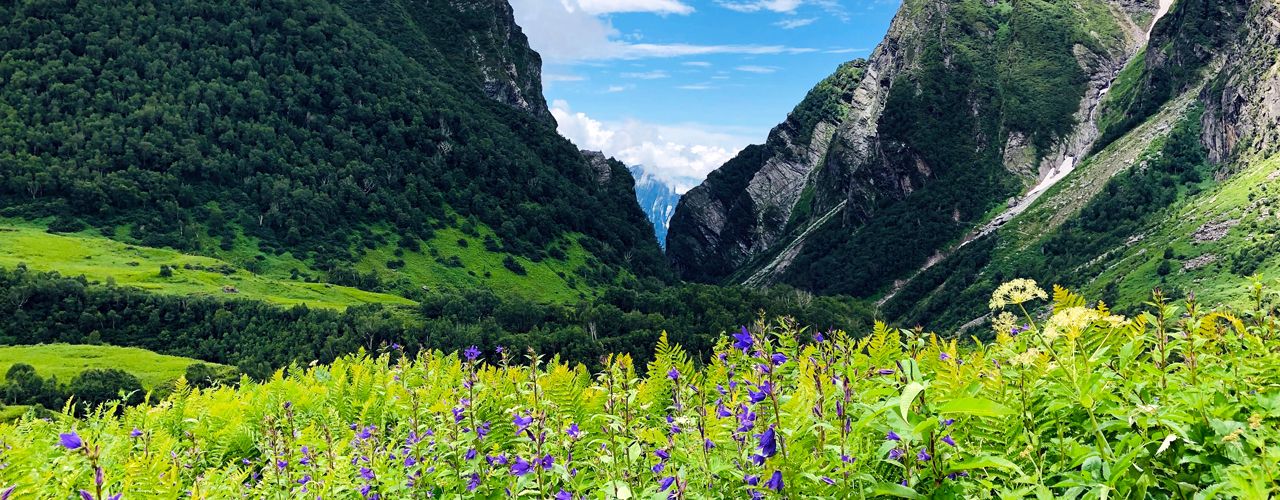
The Reality Check: The approach to the Valley is a sensory overload distinct from any other Himalayan trek. Leaving the chaotic base of Ghangaria, you cross a small bridge over the Pushpawati River, and suddenly the noise fades. The air turns heavy with a sweet, floral perfume that is almost intoxicating. As the mist swirls and clears, the green curtain lifts to reveal infinite carpets of pink Balsam, blue Poppies, and white Anemones stretching as far as the eye can see, framed by jagged black mountains and glaciers. It isn't just a view; it's a vibrating, colorful ecosystem where you are strictly a visitor—no camping, no litter, just pure, untouched nature.
Why It's Famous & What Trekkers Say
The Fame Check:
- The UNESCO Badge: It was declared a National Park in 1982 and a UNESCO World Heritage Site in 2005. It is one of the few places on earth where the "Blue Poppy" (the Queen of Himalayan Flowers) grows naturally.
- The Mythological Link: Locals believe this is the Nandan Kanan (Garden of Indra) from celestial mythology. It is also linked to the Sanjeevani Booti that Hanuman fetched in the Ramayana.
The Social Pulse:
- The Good (What Trekkers Love): The surreal density of flowers in August. The unique experience of trekking in the rain without freezing. The spiritual detour to Hemkund Sahib.
- The Bad (What Trekkers Hate): The mule dung on the Ghangaria trail (it smells and gets slippery). The relentless rain that can wash out roads and cancel plans. The strict 5:00 PM exit rule.
The Trail: Milestones & Route Map
The Route Breakdown:
- Govindghat to Pulna: Drive (4 km). The Highlight: The modernized start. You no longer walk the dusty road; shared jeeps take you to Pulna village where the trek officially begins.
- Pulna to Ghangaria: Trek (9 km - 5-6 Hours). The Highlight: The main artery. A stone-paved path following the river. It’s crowded with ponies and pilgrims heading to Hemkund Sahib.
- Ghangaria: Base Camp (10,000 ft). The Highlight: A one-street village lined with hotels and dhabas. This is your home for 3 nights as camping is banned inside the valley.
- Valley of Flowers: Day Trip (4 km one way). The Highlight: The destination. A mostly flat walk once you pass the forest checkpost. The deeper you walk (toward the grave of Joan Margaret Legge), the denser the flowers get.
- Hemkund Sahib (Optional): Steep Trek (6 km one way). The Highlight: The world's highest Gurudwara at 15,200 ft. A spiritual test of endurance with a glacial lake (Hemkund) at the top.
How to Reach (The Gateway Hubs)
The Navigation Breakdown:
- State: Uttarakhand.
- Nearest Major City: Rishikesh (The starting point for the road journey).
- Nearest Airport:Jolly Grant, Dehradun.
- By Road: Rishikesh to Govindghat is a long 10-11 hour drive on winding mountain roads (NH-58).
The TrippinAI Verdict:
- Most Cost Efficient: Government Bus (Roadways) from Rishikesh to Joshimath, then shared taxi to Govindghat.
- Most Time Efficient: Helicopter from Dehradun (Sahastradhara) directly to Ghangaria (Weather permitting, very expensive).
- Most Popular: Private Tempo Traveller/Cab from Rishikesh split among a group.
Total Budget & Hidden Costs
The Wallet Damage:
- TrippinAI Budget Rating: Mid-Budget. (Hotels in Ghangaria can get pricey in peak season due to high demand).
- Permits: Entry Fee Required. Approx INR 150 for Indians / INR 600 for Foreigners (valid for 3 days).
- Food/Travel: Expect INR 8,000 - 12,000 per person for a 5-day trip (ex-Rishikesh).
- Disclaimer: Helicopter rates fluctuate wildly. Check TrippinAI for current booking status.
Smart Spending Hacks:
- Hack #1: Share a Mule/Porter for your heavy bag from Pulna to Ghangaria. Walking light saves energy for the valley. Cost: INR 1,000 (split).
- Hack #2: Do not buy a walking stick at the base. Find a sturdy fallen branch or rent one for INR 50. Buying fancy poles for a paved trek is often overkill. Save INR 1,500.
- "Use TrippinAI for more accurate and personalized information on costs."
Food & Local Legends
Context:
- The Flavor: The Langar (Free Kitchen) at Hemkund Sahib is legendary if you plan to visit. Hot Khichdi and Tea served at 15,000 ft is a spiritual experience. In Ghangaria, hot Gulab Jamuns are the local favorite energy booster.
- Local Insight: The valley was "lost" to the outside world until 1931 when British mountaineer Frank Smythe stumbled upon it by mistake while returning from an expedition. He wrote the book Valley of Flowers, making it famous.
Seasonality, Safety & Health
Best Time to Visit:
- Best Window: Mid-July to Mid-August. This is the peak blooming season. Before July, the flowers haven't bloomed; after August, they rot.
- Avoid: June (No flowers) and September (Fading colors).
Traveler Safety Verdict:
- For Solo Travelers: High Safety. The trail is defined, populated, and well-managed.
- For Female Travelers: High Safety. Ghangaria is a busy hub with families and pilgrims. It is one of the safest treks in India for women.
- For Beginners: Perfect. If you don't mind getting wet, this is the best introduction to the Himalayas.
Risks & Actionable Mitigation:
- Landslides (Road Blockage): The road from Rishikesh to Govindghat is prone to landslides during monsoon. Mitigation: Always keep 1 Buffer Day in your itinerary for return travel. Do not book a return flight on the very next day of the trek ending.
- Hypothermia (Wet Cold): Getting soaked and then facing wind is dangerous. Mitigation: The "Dry Set" Rule. Keep one set of clothes in a plastic bag inside your bag that never leaves the hotel room. Change into dry clothes immediately upon return.
- "Check TrippinAI for real-time weather updates."
Getting Trek-Ready
Preparation Tips:
- Stair Master: The trek to Hemkund Sahib is basically 6 km of steep stone stairs. Practice climbing stairs for 2 weeks prior.
- Waterproofing: Buy a Poncho, not just a raincoat. A poncho covers your backpack too.
- Shoe Grip: Your shoes must have deep lugs. The stone path to Ghangaria gets covered in wet mule dung and mud, making it incredibly slippery.
Expedition Essentials
- Footwear: Waterproof Hiking Boots or Gum Boots (available for rent at Govindghat). Sneakers will get soaked in 10 minutes.
- The "Hero" Item: A Good Quality Poncho. You will live in this for 4 days.
- Clothing: Quick-dry synthetic t-shirts. Cotton takes forever to dry in the humid valley air.
FAQ: Trekker's Most Asked Questions
Q: Can I stay overnight in the Valley of Flowers? A: No. It is strictly prohibited by the Forest Department to protect the ecosystem. You must enter after 7 AM and exit by 5 PM.
Q: Is there mobile network in the Valley? A: No. You might get patchy BSNL/Jio signal in Ghangaria, but inside the Valley and at Hemkund Sahib, there is zero connectivity. Enjoy the digital detox.
Q: How difficult is the Hemkund Sahib addition? A: Significantly harder than the Valley trek. It is steeper and reaches high altitude (15,000+ ft). Many trekkers use mules for this leg to save energy.
Planning Valley of Flowers? Monsoon landslides can disrupt transport instantly. Static blogs won't tell you if the road is blocked today. TrippinAI gives you real-time alerts and personalized itineraries. [Check Road Status Now.]
Recommended for You
Namdapha Rainforest Trek Guide: The "Amazon of India" & The Four Cat Realm
Japfu Peak Trek Guide: The "Rhododendron Giant" & Valley Watchtower